
The Big Fat Caterpillar

Your quick guide to recognizing the most common greenhouse caterpillars
Caterpillars show up in many greenhouse grown crops: peppers, tomatoes, cucumbers, flowers and ornamentals. Some feed quietly on leaves, others hide inside fruits, and a few stay low in the plant, close to the roots where you hardly spot them at first.
In this overview, we focus on the caterpillars growers encounter most often in Europe, with simple traits that help you recognize each one right away. Once you know what each species looks like and where it prefers to feed, it becomes much easier to spot them early and prevent bigger issues in your own greenhouse.
1. Tomato looper
Chrysodeixis chalcites
"The bright-green inchworm"
Where it shows up
Bell pepper, tomato, cucumber, gerbera, and various flowers
How to recognize it
Bright, clean green
Smooth texture
A small dark dot on each body segment
Moves in a fluent looping motion
What makes it stand out
It loops smoothly and has a very even, fresh-green colour.
Don’t confuse it for Silver Y, as it loops too, but has a rougher texture and a sharper white stripe.

2. Silver Y
Autographa gamma
"The rough-skinned looper"
Where it shows up
Vegetables like tomatoes and lettuce, chrysanthemums and ornamentals
How to recognize it
Green or yellow-green
Slightly rough or textured skin
Clear white side stripe
Loops, but movement is stiffer than the Tomato looper
What makes it stand out
Silver Y has a stronger white stripe and a more uneven surface compared to the Tomato looper.

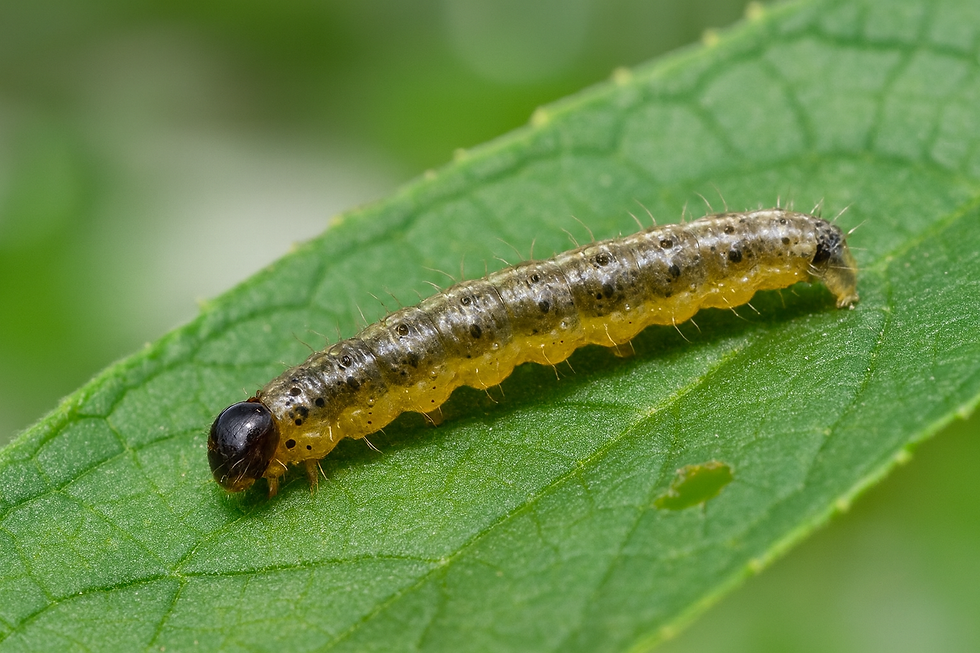
3. European pepper moth
Duponchelia fovealis
"The low-hider"
Where it shows up
Gerbera, strawberries, peppers and potted plants
How to recognize it
Grey or brown body
Dark head
Long, thin shape
Often deep in the plant base or crown
What makes it stand out
Prefers staying hidden and low.
Crown damage or low stem damage is a strong signal.
Can be present in large numbers, before actual damage becomes visible
4. Diamondback moth
Plutella xylostella
"The skinny fast one"
Where it shows up
Leafy greens, cabbage crops and brassica ornamentals
How to recognize it
Very small, thin larvae
Bright green
Wriggles rapidly when touched
Narrow, pointed back end
What makes it stand out
Makes tiny “window-like” patches instead of round holes.

5. Banana moth
Opogona sacchari
"The stem-digger"
Where it shows up
Pot plants, ornamentals and stored plant material
How to recognize it
Cream to light brown
Dark head
Slightly translucent body
Often in stems or decaying plant tissue
What makes it stand out
Instead of fresh leaves or fruit, Opogona prefers older tissue, stems and bases.

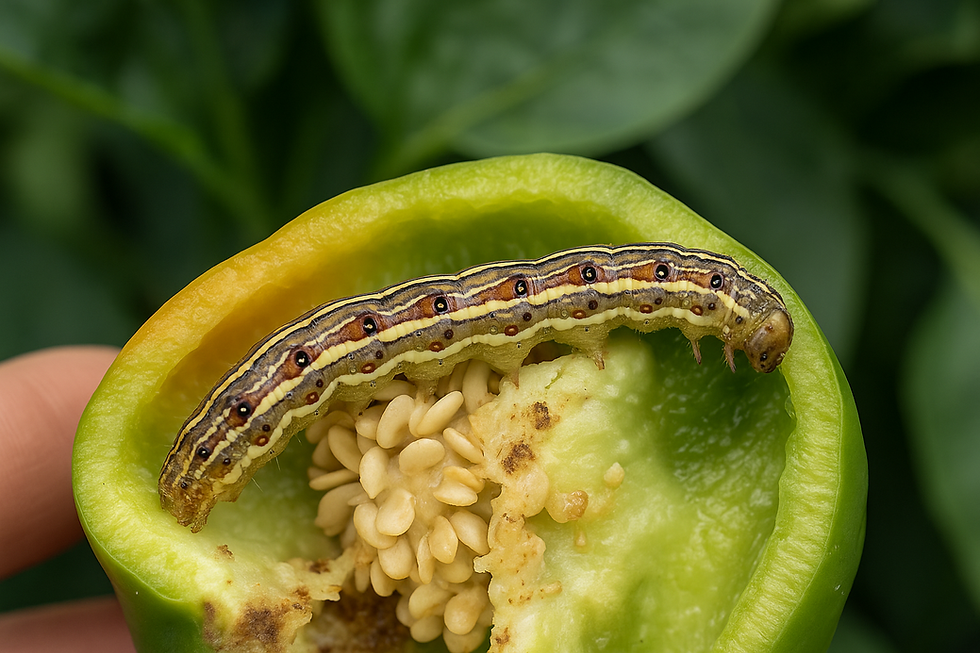
6. Cotton bollworm
Helicoverpa armigera
"The fruit-invader"
Where it shows up
Peppers, tomatoes, berries, cucumbers, ornamentals
How to recognize it
Green to brown body
Thin stripes along the sides
Dark dots on each segment
The head is more pronounced
A bit “chunkier” than loopers
What makes it stand out
Helicoverpa is one of the few caterpillars that bores into fruit.
If you find a caterpillar inside a pepper or tomato, especially near the seeds, it’s almost always this species.
How to quickly tell them apart
Inside a fruit (pepper or tomato)?
→ Cotton bollworm
Moving in an inchworm loop?
→ Tomato looper or Silver Y
Hidden low in the plant base?
→ European Pepper moth or Banana moth
Very small and fast-wriggling?
→ Diamondback moth
Putting your knowledge into practice
Recognising which caterpillar is present tells you a lot about what will happen next, fruit damage, leaf holes, crown issues or stem tunneling. And that makes timing much easier and more precise. This is where PATS tools support growers:
PATS-C: when moths fly, larvae aren’t far behind
By monitoring moth activity in real time, PATS-C shows when a new wave of eggs and larvae is likely to appear. It gives growers a head start instead of waiting for visible damage.
PATS-Vinder & PATS Kalendar: from observations to clear timing
PATS-Vinder makes it simple to record caterpillars, eggs or feeding signs directly in the crop. These observations connect with moth flight data to predict when the next larval spike will arrive. PATS Kalendar then turns these insights into practical reminders, helping growers prepare biological actions at the right moment and avoid last-minute surprises.
Together, these tools bring timing, insight and confidence to caterpillar control, making greenhouse protection more proactive and far more consistent.
Ready for the next caterpillar?
Caterpillars can cause serious damage, but recognising them doesn’t have to be difficult. Once you know which species you’re dealing with and where it prefers to hide, you’re in a much stronger position to protect your crop. With PATS-C, PATS-Vinder and PATS Kalendar supporting your scouting and timing, you can stay a step ahead throughout the season.
Read this in Dutch
